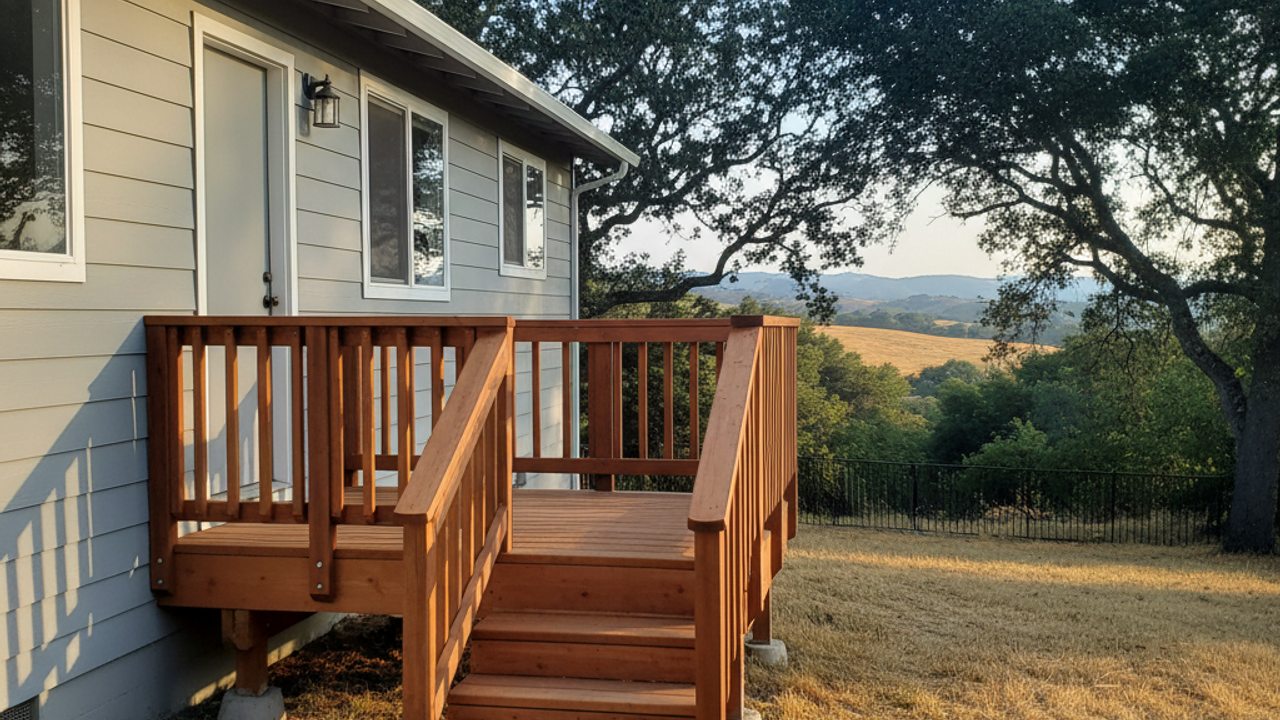
People ask us when the "good season" is for deck work here, expecting a one-word answer like spring. It's not that simple in the foothills. El Dorado County sits at an elevation where you get real winter cold and real summer heat in the same calendar year, and both of those change how concrete cures, how wood moves, and what you're allowed to do with power tools outside. The honest answer depends on which part of the job you're asking about.
What the ground does here
A lot of lots around Placerville, Diamond Springs, and up toward Camino sit on decomposed granite or rocky, shallow soil. It drains fast, which is good news for footings, but it also means frost can get into shallow holes during a hard cold snap in December or January and heave a footing that wasn't poured deep enough. Code calls for footings below the frost line, and at our elevation that's not a formality. Dig and pour in the dead of winter and you're fighting cold concrete, slower cure times, and sometimes frozen topsoil that makes the hole harder to dig cleanly in the first place.
Spring, after the ground softens but before it dries rock-hard, is usually the easier dig. April and May give you workable soil and temperatures that don't mess with the concrete cure.
Summer heat and fire season change the job
July and August in Placerville regularly hit the mid-90s, sometimes higher. That heat affects more than comfort. Pressure-treated lumber that's still wet from the treatment plant dries out fast in that kind of heat, and if you fasten and seal it too soon, it shrinks afterward and pulls nails or opens gaps you didn't plan for. Composite decking expands in the heat too, and installers have to leave the manufacturer's gap spec between boards, or you get buckling the first really hot week after install.
Fire season is the other factor nobody mentions until it affects their project. Red flag warnings are common from June through October in this county, and on those days, cutting, grinding, or anything that throws a spark can get restricted or shut down outright, especially if your lot backs up to dry grass or timber. A straightforward deck rebuild can lose a day or two waiting out a red flag day. It's worth building that slack into your expectations if you're scheduling for August.
Staining and sealing need a narrow weather window
This is the part of deck work most tied to the calendar and least forgiving of guesswork. Stain and sealer need the wood dry, the air dry, and no rain for at least 24 to 48 hours after application, sometimes longer depending on the product. Direct, blazing sun on a 95-degree day can flash-dry a coating before it penetrates the wood fiber, which means it peels early instead of lasting the two to three years it should. Cold is just as bad. Most sealers won't cure right below about 50°F, so a January application is a waste of product.
That leaves a short list of good windows: May into early June before the real heat sets in, and September into October once the heat breaks but before the fall rains start. Those few weeks of mild, dry weather are when a stain job actually holds up the way it's supposed to.
Fall is underrated for building
September and October get overlooked because everyone associates deck projects with spring, but the weather is often better for actual construction. The ground hasn't frozen yet, fire restrictions usually start easing once we get a little moisture, and daytime temperatures sit in a range where lumber isn't shrinking on you mid-install. If you want a deck finished and sealed before the holidays, or just before the first good storm rolls in off the coast sometime in November, fall is a smart time to start.
The one thing to watch is the shift to our wet season. Once the rain starts in earnest, usually November, framing work gets slower and footing excavation gets muddy. Not impossible, just slower.
Winter isn't dead time, it's planning time
We still build through winter when there's a dry stretch, and structural repair work, especially replacing a rotted ledger board or sistering a weak joist, doesn't really care what season it is as long as the wood isn't soaked through. What winter is genuinely good for is the paperwork side. El Dorado County Building Department handles permits for new decks and most structural work, and that process involves a plan check, a setback review against your property line, and inspections at the footing stage and again at framing before anything gets covered up. None of that requires good weather. Getting your permit application in during January or February means you're not waiting on plan review once spring digging season actually opens up.
If your property has an HOA, which is common in some of the newer subdivisions around El Dorado Hills and Cameron Park, add their design approval into that same winter planning window. That review can take a few weeks on its own, separate from the county.
So, when should you actually start?
If you're building new or doing a full replacement, aim to start digging in April or May and plan on staining in that same early window or waiting until fall. If it's a repair job, like swapping out rotted framing or re-securing a ledger that's pulling away from the house, that can happen almost any time there's a dry stretch, including winter. If you're just due for a re-stain, mark your calendar for late spring or early fall and don't try to force it into a July heat wave or a January storm.
We plan jobs around this county's actual weather, not a generic calendar. If you want to talk through timing for your specific project, Omega Deck Solutions can walk you through what makes sense for your lot and your deadline.