Every job below is one we do ourselves across Placerville.
We dig and pour footings below frost depth, then frame with joist hangers and structural screws rated for the span. The ledger board gets flashed before a single joist goes up, because that's the spot where most deck failures start. A simple platform off the kitchen and a multi-level deck stepping down a slope get the same attention to that detail.
A soft spot in the decking usually means the joist underneath has rotted, not just the board on top. We pull the bad boards, sister or replace the joist, and check the ledger flashing while we're in there. Railings that wobble get re-anchored to solid framing instead of just tightened.
Sierra foothill sun grays untreated wood fast and dries it out from the top down. We pressure wash, let the boards dry for a couple of days, then apply an oil-based stain or a solid color sealer depending on the wood and how much wear it takes. Composite decking gets a different treatment, mostly cleaning, since staining it isn't an option.
Some lots drop off sharp behind the house, and a flat deck plan just won't sit right on that grade. We lay out multi-level decks with the stairs and landings where the slope actually wants them, not where a stock drawing puts them. You get a plan drawn to your yard before any lumber is ordered.
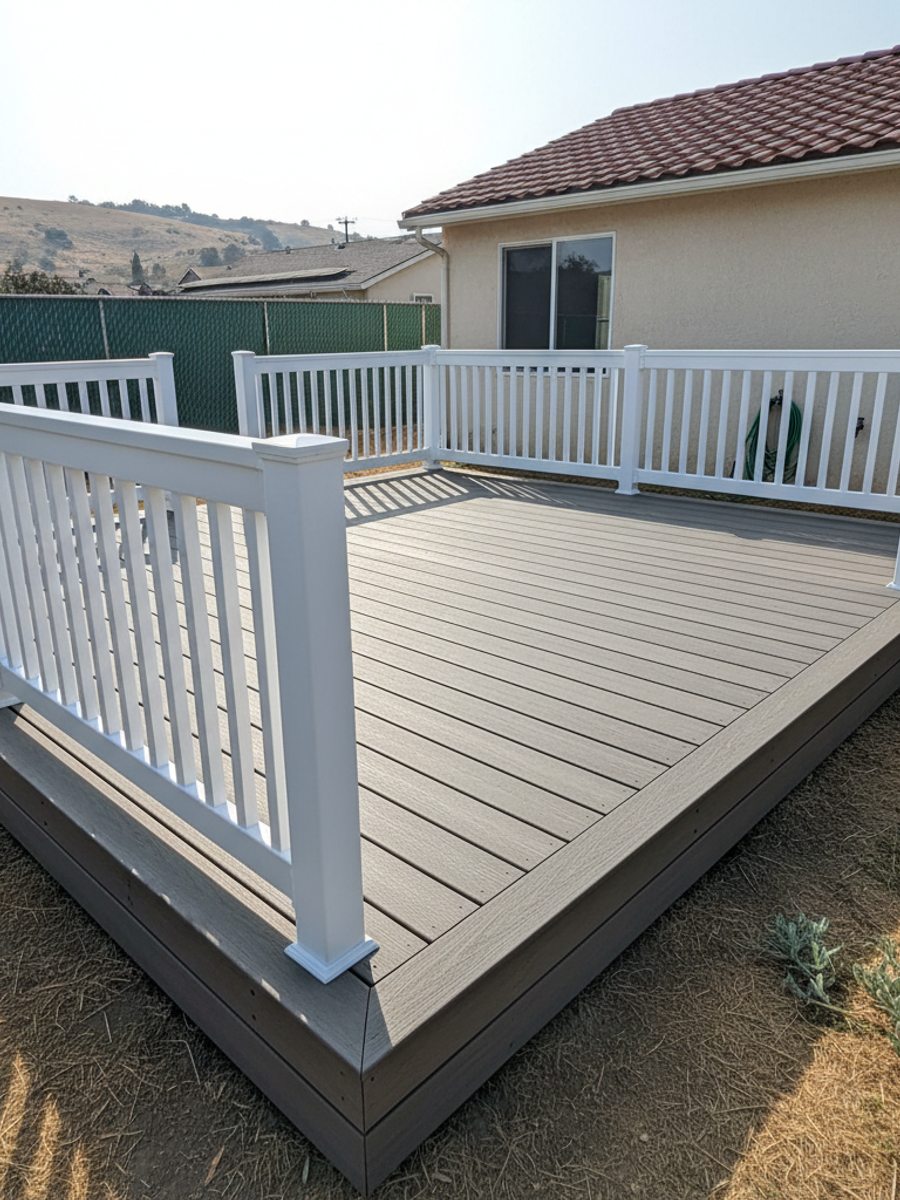
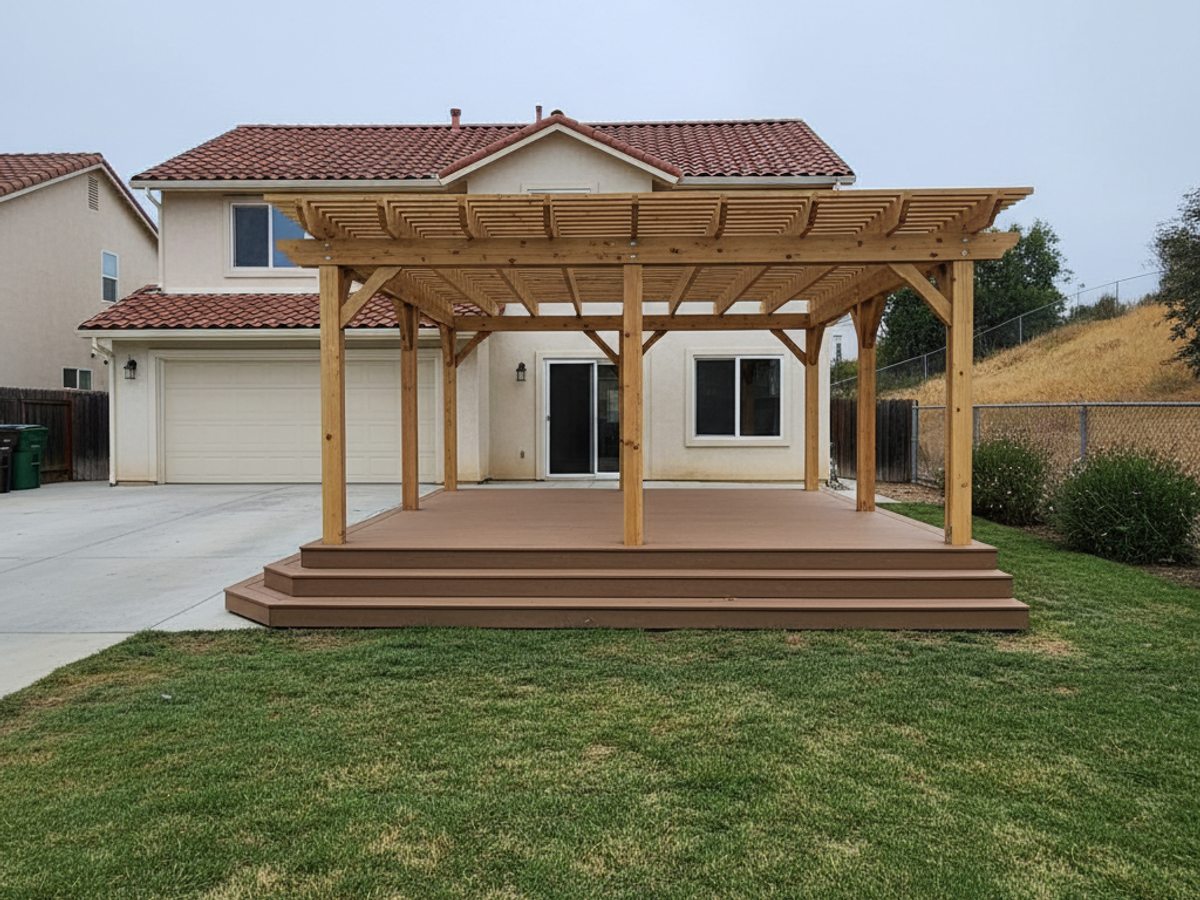
Composite boards don't rot, but the framing underneath still has to be done right. Hidden fastener systems in particular require consistent joist spacing, or the boards telegraph every gap in the frame below. Installations with Trex or TimberTech follow the manufacturer's span tables, not the same spacing used for solid wood decking.
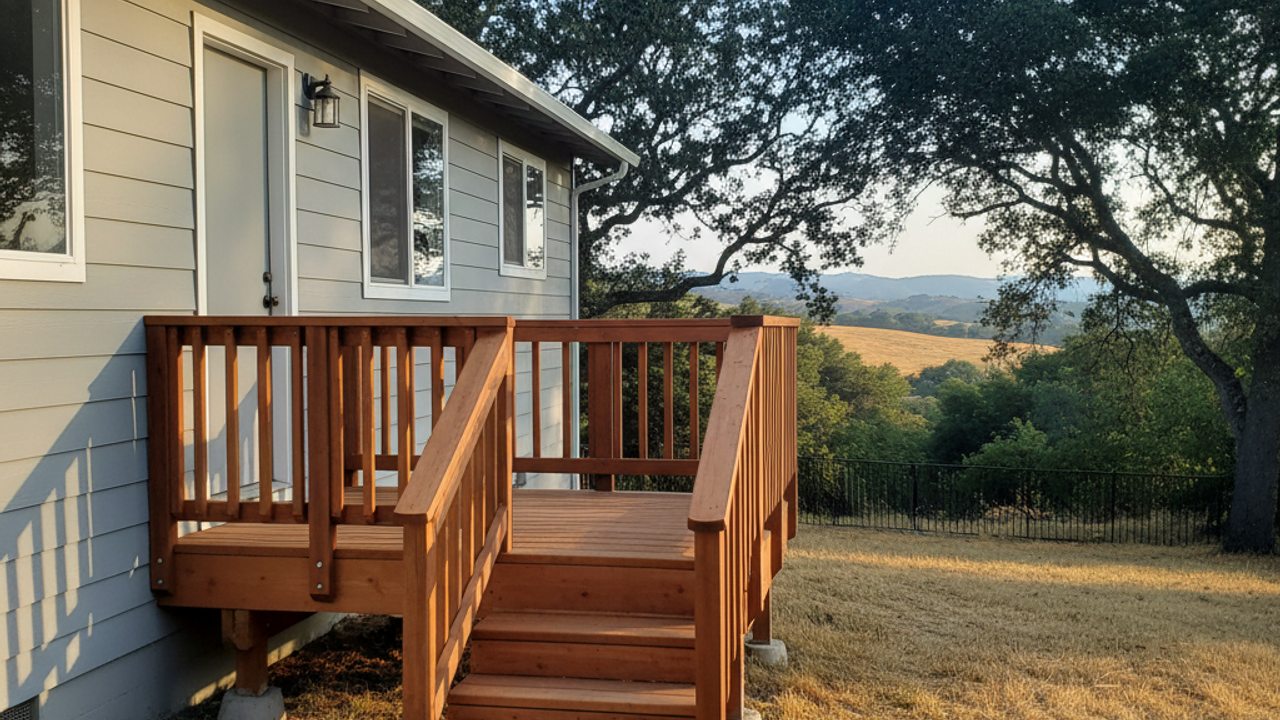
Guardrail height and baluster spacing are code items, not style choices, an inspector will measure both. Wood, metal, and cable railing systems all get installed to that standard, and cable rail in particular requires posts rated for the tension or it sags within a year.
If the frame underneath is still sound, we can pull the old decking and lay new boards without rebuilding the structure. This is usually cheaper than a full rebuild and a good option when the joists have years left in them but the boards have cupped or split.
Stacking two or three deck levels means the stair stringers and landings have to be engineered together, not built one level at a time and hoped into place. We frame the whole structure as one system so the rise and run stay consistent from the top deck to the bottom.
A sagging deck usually traces back to an undersized beam, a rotted post base, or a footing that's heaved. We open up the framing, find the actual failure, and replace what's compromised, sistering joists where the rest of the board is still sound.
We build wood and metal fencing to match or complement the decking we install, using the same attention to post depth and hardware.
Four steps, and no surprises in any of them.
You tell us what you want doing, we look at what is actually there, and we ask the awkward questions early.
In writing, itemised, free. If something might add cost later we flag it now rather than at the end.
Same crew throughout. We cover your floors, keep the dust down and tidy up before we leave each day.
You point out anything you are not happy with and we fix it before the invoice, not after.
Deck work covering Placerville and towns within about 50 miles.
Questions that come up once a deck project is underway.
Describe the problem and we will tell you what it probably is. No obligation.